



The Beef Battle — Imports vs. Independence
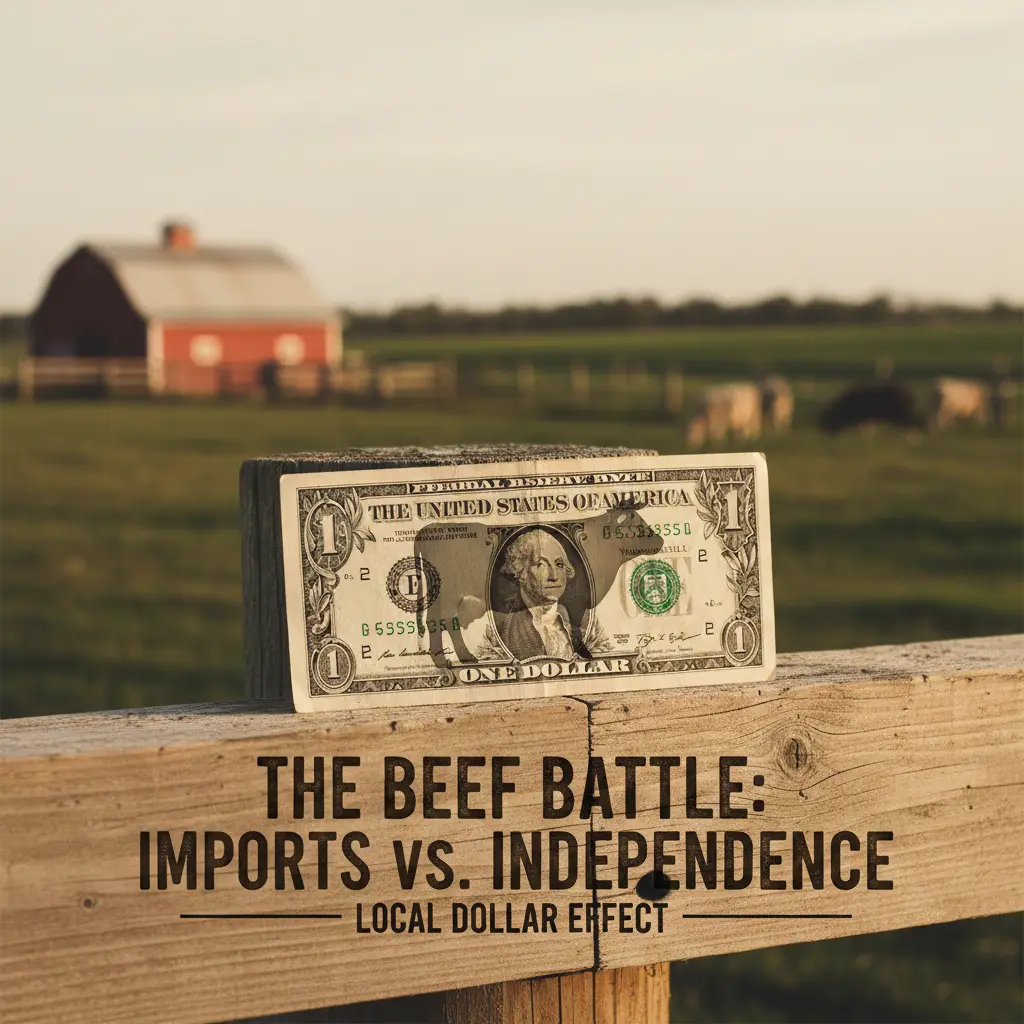
Our Take On The Recent Imports Discussion
Dear Friends,
The talk in Washington right now is about beef imports—specifically, from Argentina.
The Trump administration just announced plans to quadruple the amount of Argentine beef allowed into the U.S., jumping from about 20,000 metric tons to 80,000 metric tons a year.
The claim is simple: more beef equals lower prices at the grocery store.
Trump says bringing in cheaper foreign beef will “create competition” and “help American families afford dinner again.”
But that’s short-term thinking.
When beef is raised and sold locally, the dollars stay in motion inside the community.
The farmer earns a living and buys feed from a local mill.
The feed mill owner buys breakfast at the diner.
The diner owner buys coffee from the local roaster.
The same dollar changes hands again and again—each time strengthening the town.
A dollar is just a placeholder for work and resources—a symbol of the effort, time, and material that went into creating something of value.
When we keep those resources close to home, we keep our nation wealthy.
But when we import beef, we are just exporting farming and the wealth goes with it.
Cheap foreign beef might look like savings on paper, but it quietly drains wealth from rural America.
That’s not competition — it’s economic decay.
 Where Heritage Homestead Stands
Our vision runs the opposite direction.
We’re not asking for more imports; we’re fighting for more independence—more small farmers, more local processors, and a food system that actually belongs to the people who eat from it.
If I were shaping policy, I’d push for:
 Fewer regulations on small farms—so local producers can sell meat without being buried in paperwork meant for industrial plants.
More grants and incentives for new farmers—to make it possible for young families to start without drowning in debt.
Making farming appealing again—profitable, innovative, and respected. Something worth building, not just surviving in.
Instead of buying beef halfway across the planet, we should be making it easier for young people to start and buy farms. More supply means lower prices, they've got that part right but sending those dollars overseas is wrong.
When you buy from a local farm, you’re not just feeding your family—you’re keeping your neighbor in business, your roads maintained, and your community strong.
That’s the future we’re building here at Heritage Homestead—grass-fed, corn- and soy-free, raised on local land by local hands.
Imports might look cheaper on paper, but real value—the kind that keeps America alive—comes from farms like this one.
 The Local Dollar Effect
A single dollar spent locally can circulate 6–10 times before leaving the community.
Every one of those exchanges—feed, fuel, repairs, coffee, meals—keeps work, wealth, and opportunity right where it belongs.
That’s how you build strong towns and a strong nation.